


There are not many cities in the United Kingdom, let alone the world, that have as fascinating backstory to their origin than that of the northern enclave known as Durham. If one is to believe this incredible folktale, they would have to turn the clock back more than a few centuries.
It begins with the Viking incursions into the British Isles sometime in the 7th or 8th centuries. The body of the Anglo-Saxon St. Cuthbert, (634 -687) needed to be moved from the sanctity of his burial place on Lindsfarne, (Holy Island) for safekeeping. Divine intervention instructed the current monks to take the relics to a place called Dunholme, (Durham). Dun is “hill” in old English and “holme” is island in Norse.
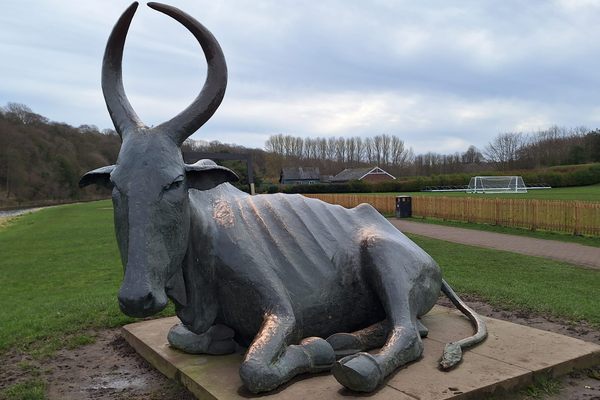
The issue, no one from this funeral cortège knew where this location was. As the story goes, the party was met by a milkmaid who had lost her cow. They were informed by a second maiden that she had seen her bovine heading for Dunholme. Off they set excitedly in search of their desired goals and the rest, they say, is history.
In 1997, English sculptor Andrew Burton was commissioned to erect a piece along the city’s riverside art walk. He chose to depict a large bronze image of an ox resting by the River Wear, surrounded by several stone fragments. These represent the cross-sections of Norman columns found in the Cathedral. The statue is said to represent the story of the Dun Cow, and not to be interpreted as a ‘specifically Christian piece’.