

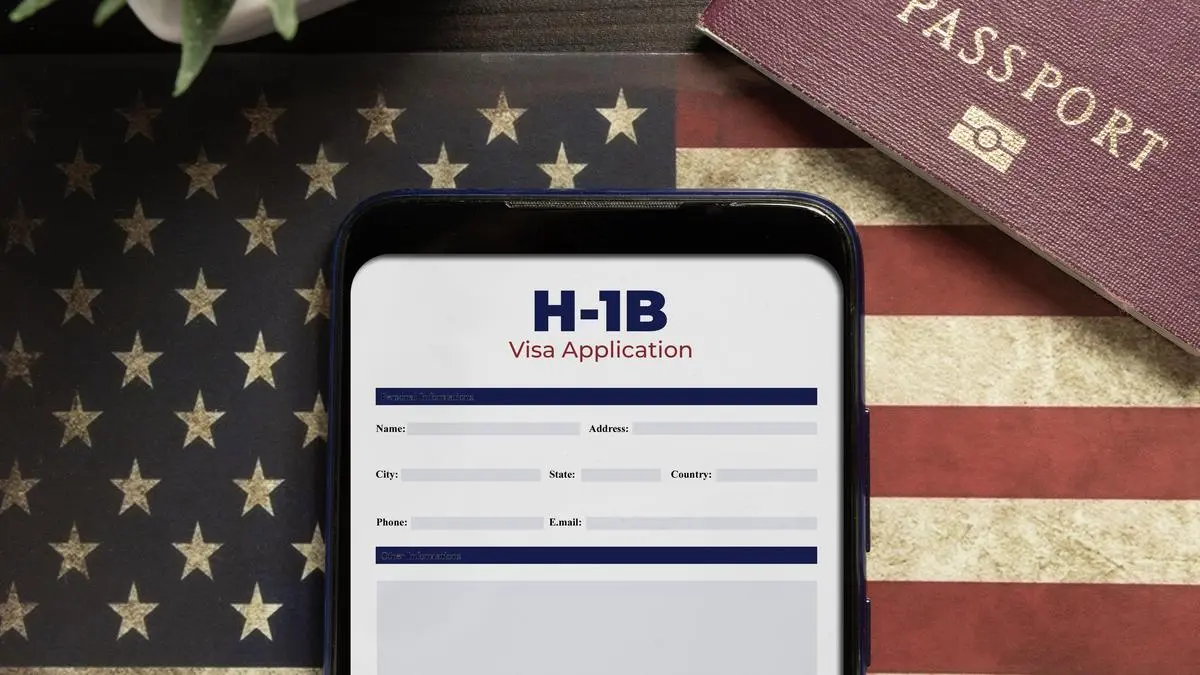

The Department of State said it uses all available information in visa screening and vetting to identify visa applicants who are inadmissible to the US
The US Department of State (DoS) announced on Wednesday that it will expand mandatory online-presence reviews to all H-1B visa applicants and their dependants from December 15, requiring them — along with F, M and J visa seekers — to make their social media profiles public as part of heightened national-security vetting.
In a circular, the State department said it uses all available information in visa screening and vetting to identify visa applicants who are inadmissible to the US, including those who pose a threat to the country’s national security or public safety.
“We conduct thorough vetting of all visa applicants, including online presence review of all student and exchange visitor applicants in the F, M and J non-immigrant classifications. Every visa adjudication is a national security decision. A US visa is a privilege, not a right,” it said.
The vigilance
The DoS added that the vigilance during the visa issuance process is to ensure those applying for admission do not intend to harm Americans and the national interests, and that all applicants establish their eligibility for the visa, including that they intend to engage in activities consistent with the terms for their admission.
Varun Singh, MD, XIPHIAS Immigration, explained that this is a clear indication that the US wants deeper, technology-driven vetting. So far, these checks were used selectively, but bringing every H-1B, F, M and J applicant under the same framework formalises what has been an evolving national-security trend.
“For Indian professionals, this doesn’t change the core criteria for visa approval, but it does make the screening more granular. Applicants will need to ensure that the information shared across forms, employment history and social media aligns. Most issues arise not from posts themselves, but from inconsistencies that raise avoidable red flags,” he said.
Alongside, timelines emerge as a concern; anytime the vetting process expands, adjudication tends to slow down, especially during the annual H-1B cap season when volumes peak.
Similarly, Sanchit Vir Gogia, Chief Analyst at Greyhound Research, shared that this change transfers power from structured adjudication to discretionary judgment, often by officers who neither share the applicant’s cultural lens nor operate under judicial oversight. Once denied, there is no way to appeal.
Talent heads now have to navigate projects knowing that a vetted candidate might be denied entry over a tweet posted years ago. For families, this policy splits decisions across dependants and main applicants, increasing the risk of one approval being followed by another denial.
Content moderation
Applicants with experience in content moderation or fact-checking roles, jobs that are routine in tech outsourcing hubs like India or the Philippines, are being flagged as high risk.
LGBTQ+ individuals, women with locked accounts and survivors of online abuse will also be asked to open the digital doors they have kept closed for safety.
“This policy empowers anyone with an internet connection to crawl through a foreign worker’s life. It is a command to abandon privacy, to stand exposed not only to a consular officer’s decision but to bad actors, hostile governments and corporate adversaries who can freely access once-private content. At a time when data protection is non-negotiable and cyber risk is board-level priority, this policy makes personal safety a visa condition. That is not governance but coercion masquerading as security. It is a systemic error built into policy,” he noted.
Published on December 4, 2025