

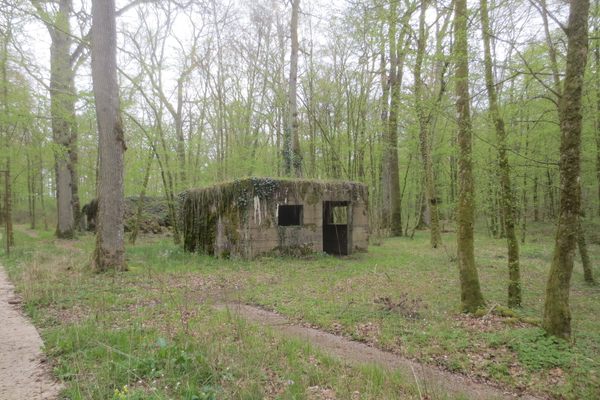

During the First World War, the German forces invading France were in dire need of stronger structures to protect the soldiers, as trenches only offered limited protection against artillery attacks. To address this, a plant was built deep in a forest, some 10 miles behind the Verdun front lines, hidden from scouting planes and out of reach from enemy fire.
Constructed in 1915 under the direction of German Captain Hans Marguerre, the site served as an experimental center where engineers tested various methods for pouring concrete and achieve the desired, stable forms quickly. Many of the buildings left behind were test objects, with traces of the diverse techniques used still visible today.
By 1916, dozens of structures had been built throughout the area, including barracks, a village for the engineers, workshops, latrines, and Marguerre’s private quarters. Decorative elements at the top of some walls are still visible in several of the buildings that once served as lodgings.
After the war, the camp was abandoned, and locals stripped the buildings, leaving only concrete shells scattered throughout the forest.
It is said that, ironically, members of the French Resistance used Camp Marguerre as a hideout during the Second World War.
In recent years, the camp has been equipped with new signage and an accessible walking path. Visitors can also scan a QR code on the site that redirects them to the app “EXPLORGAMES.” where they can dive into daily life at the camp in 1916 as undercover journalists whose mission is to foil the enemy’s plan.